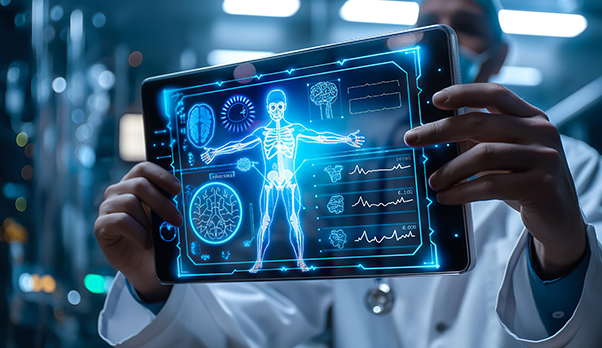
Fatigue sets in, complex symptoms blur, and the human brain simply skips a beat. For decades, this was just an accepted hazard of medicine. But the landscape has shifted violently with the integration of generative ai in healthcare. We aren’t talking about simple symptom checkers anymore; the technology has graduated to a level where it acts less like a calculator and more like a seasoned, albeit insomniac, colleague.
Beyond the Text Prompt
What changed the game was the shift toward large medical models (LMMs). Systems like Med-PaLM demonstrated that an algorithm could pass medical licensing exams, but the real utility lies in multimodal ai. It doesn’t just read patient charts. It looks at medical imaging, analyzes blood work, and listens to patient history simultaneously. It connects dots that a specialist, hyper-focused on one organ system, might miss. It forces a pause, a reconsideration of the facts.
Where the Algorithms Actually Help
The hype cycle often obscures utility, yet healthcare development has found firm ground in specific applications. AI diagnostics is a rigorous filter for clinical decision support. The practical deployment covers a wide spectrum:
- Radiology Double-Checks: Algorithms now flag subtle fractures or nodules in X-rays and CT scans before a radiologist even opens the file.
- Rare Disease Pattern Matching: LMMs can scan millions of case files to identify obscure genetic conditions that a local GP might never encounter in a lifetime.
- Triage Prioritization: In crowded waiting rooms, AI evaluates vital signs to flag deteriorating patients faster than standard protocols.
- Medication Reconciliation: Scanning across disjointed electronic health records to predict adverse drug interactions that human pharmacists might overlook.
- Pathology Assistance: Counting cells and grading tumors with a level of consistency that eliminates inter-observer variability.
The Bias Problem
Diagnostic accuracy improves only when the data is clean, and medical data is notoriously messy. There is the persistent issue of data bias. If an AI is trained primarily on data from one demographic, its ability to diagnose skin conditions or cardiovascular issues in underrepresented groups plummets. It’s a patient safety issue that developers are still wrestling with. The machine is only as objective as the history it was fed.
The Ultimate Second Opinion
Getting a second opinion used to mean waiting weeks for an appointment with a specialist. Now, that consultation happens in seconds. The goal of ai diagnostics in 2026 is to catch the obvious misses and the subtle clues. It pushes the error rate down, not to zero, but to a number that saves thousands of lives. The doctor still makes the call, but now they make it with a safety net.
