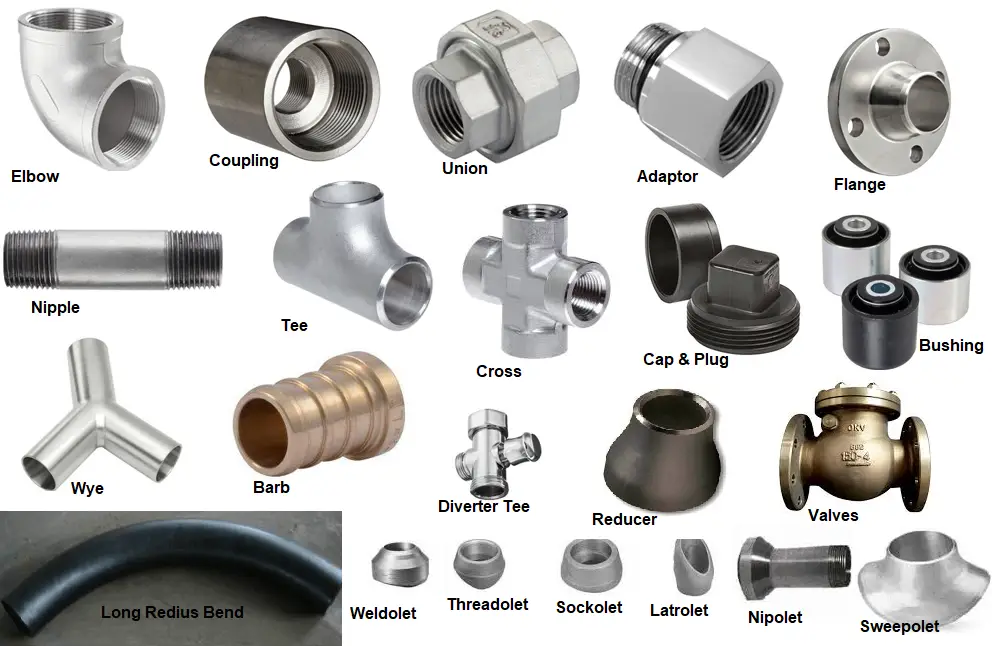
Industrial pipe systems are essential for industries like manufacturing, construction, oil and gas, water treatment, and power generation. Pipe fittings play a key role in ensuring safety, efficiency, and durability. Whether managing factory operations or utility infrastructure, it’s important to understand the types of pipe fittings and their purposes. This article explores common pipe fittings, their uses, and why choosing the right ones is crucial for business operations.
Why Pipe Fittings Matter in Industrial Systems
Pipe fittings connect, redirect, or terminate pipe runs, ensuring the smooth flow of materials like gas, water, chemicals, or steam while keeping the system secure and sealed. Without proper fittings, even high-quality piping systems can face leaks, pressure loss, and failures. This is especially important in industries with strict safety and environmental regulations, where reliability is crucial.
1. Elbow Fittings
Function: Elbow fittings are used to change the direction of flow in a piping system.
Common Types:
- 90-degree elbows: Change flow direction sharply.
- 45-degree elbows: Allow a gentler directional shift.
These fittings are common in industries that require tight space configurations, such as chemical processing plants or oil refineries.
2. Tee Fittings
Function: Tee fittings split or combine flow. They have one inlet and two outlets, or vice versa.
Tee fittings are essential for redirecting flow to multiple sections within a system. Commonly used in HVAC and water distribution networks, they play a key role in ensuring efficient and reliable flow management.
3. Reducer Fittings
Function: Reducers adjust the diameter of the pipe from a larger size to a smaller one.
Types:
- Concentric reducers: Aligned with the centerline of the pipe.
- Eccentric reducers: Offset to one side, used when bottom or top pipe alignment is needed.
Reducers are ideal for managing pressure transitions in systems, especially where varying flow rates are common.
4. Couplings and Unions
Function: These fittings join two pipes together securely.
- Couplings are permanent solutions.
- Unions allow future disconnection for maintenance.
Facilities with high-maintenance systems, like food processing plants, often rely on unions to enable quick and effortless disassembly.
5. Cross Fittings
Function: Cross fittings connect four pipe sections together, typically at 90-degree angles.
Cross fittings are key for systems where pipelines converge or to balance flows from different directions. Less common than tees, they are crucial for managing complex installations efficiently.
6. Cap and Plug Fittings
Function: These fittings seal the end of a pipe.
- Caps fit over the end.
- Plugs fit inside the pipe.
Used during testing phases or when a pipe system segment is no longer in use, they prevent leaks and contamination.
7. Flanges
Function: Flanges connect pipes, valves, and other equipment to form a secure system using bolts and gaskets.
Flanged fittings are vital in high-pressure industries like energy production and chemical manufacturing. As industries grow, these fittings ensure durability and compliance with strict safety standards.
8. Nipple Fittings
Function: Nipples are short pipe lengths with male threads at both ends, used to connect two female-threaded fittings or pipes.
They play a crucial role in high-pressure environments and are commonly used in plumbing and hydraulic systems.
9. Valves and Fitting Accessories
Valves may not be traditional fittings, but they’re often used with them to control substance flow. Examples like shut-off valves, check valves, and pressure relief valves are commonly paired with industrial pipe fittings to improve system control and efficiency.
Factors to Consider When Choosing Pipe Fittings
Choosing the right industrial pipe fittings demands careful consideration of several important factors.
- Material Compatibility: Fittings should match the pipe material (e.g., stainless steel, carbon steel, PVC).
- Pressure and Temperature Ratings: These must meet the system’s operational requirements.
- Application Type: Chemical processing, water treatment, and gas transmission all have different standards.
- Regulatory Compliance: Ensure fittings meet local and national industrial safety codes.
Choosing the wrong fitting can compromise the entire system, resulting in downtime or costly repairs.
Conclusion
Understanding the types and functions of industrial pipe fittings is key to building safe and efficient piping systems. From elbows that redirect flow to flanges for high-pressure connections, each fitting has a specific role. For businesses, sourcing quality industrial pipe fittings in Utah ensures reliability and success. These small components are vital for safety and performance. Choosing the right fittings and ensuring proper installation can reduce failures and keep operations running smoothly.
