Injection molding rarely fails because of a single dramatic mistake. More often, problems grow quietly: slight warpage on a housing, gloss inconsistency across a panel, dimensional drift after several hours of production, or cycle times that gradually creep upward. In many cases, these issues share a common root—unstable or poorly managed mold temperature.
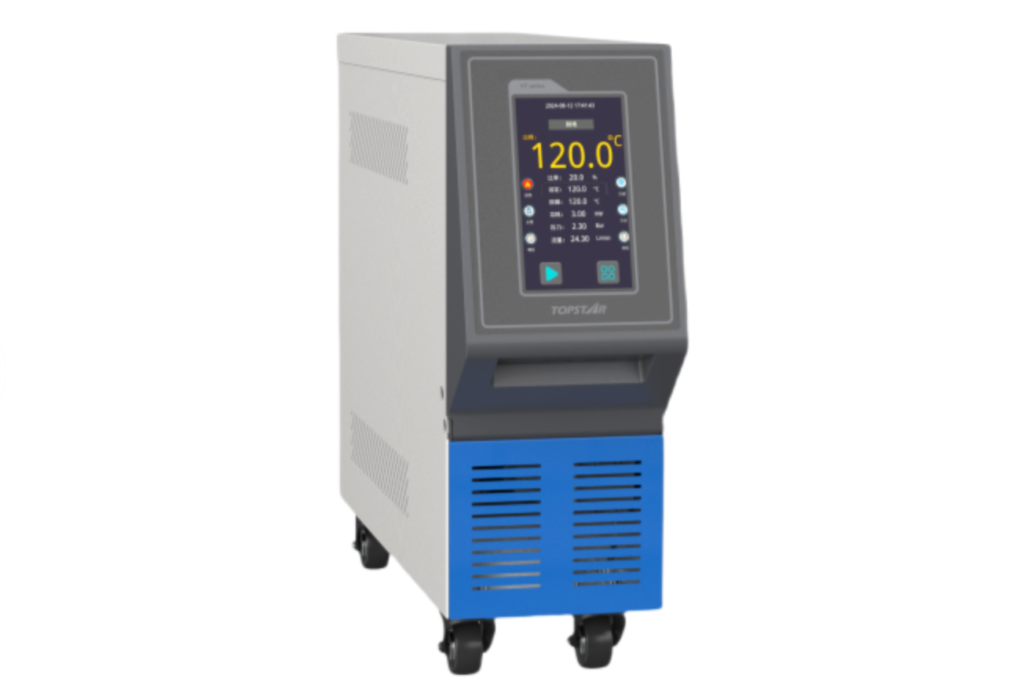
A mould temperature controller (MTC) sits at the center of this challenge. While often treated as auxiliary equipment, it plays a decisive role in determining how consistently molten plastic fills, packs, cools, and solidifies inside the mold. Precision and stability in injection molding are not abstract ideals; they are the cumulative result of thermal control applied correctly, repeatably, and intelligently.
This article explores how mould temperature controllers contribute to higher molding precision and long-term production stability, not from a theoretical standpoint, but through real process behavior, shop-floor realities, and measurable outcomes.
Understanding Temperature as a Core Variable in Injection Molding
Mold Temperature Is Not a Static Parameter
Mold temperature is frequently recorded as a single number on a setup sheet, yet in practice it behaves as a dynamic system. Heat enters the mold through molten polymer, shear energy, and ambient conditions. Heat leaves through cooling channels, machine platens, and convection.
Without active control, this balance fluctuates continuously. Even a few degrees of variation can alter melt flow behavior, crystallization rates, shrinkage patterns, and surface replication. Precision molding demands that this thermal environment remains predictable across thousands—or millions—of cycles.
A mould temperature controller transforms mold temperature from a passive condition into a controlled process variable.
The Difference Between “Cooling” and “Temperature Control”
Basic cooling relies on water flowing through channels, often at uncontrolled or poorly regulated temperatures. This approach removes heat but does not actively regulate the mold’s thermal state.
A mould temperature controller, by contrast, monitors supply and return temperatures, adjusts heating or cooling output in real time, and maintains a target setpoint with minimal deviation. This distinction matters because precision molding depends not only on removing heat, but on removing it at the right rate and at the right time.
How Mould Temperature Control Enhances Injection Molding Precision
Consistent Melt Flow and Cavity Filling
Plastic viscosity is highly temperature-dependent. When mold temperature fluctuates, flow resistance inside the cavity changes accordingly. This leads to:
- Incomplete filling in thin sections
- Overpacking in thicker areas
- Inconsistent weld line strength
- Variable flow fronts across multi-cavity molds
A stable mold temperature ensures that each shot experiences nearly identical flow conditions. The melt advances uniformly, fills intricate features more reliably, and reduces sensitivity to minor variations in injection speed or pressure.
Precision improves not because the machine works harder, but because the process becomes more forgiving.
Improved Dimensional Accuracy and Tolerance Control
Dimensional variation often originates during the cooling and solidification phase. Uneven or unstable mold temperatures cause differential shrinkage, which translates into warpage, sink marks, or tolerance drift.
By maintaining uniform thermal conditions across the mold surface, a mould temperature controller helps ensure:
- Balanced shrinkage across all cavity regions
- Repeatable part dimensions from cycle to cycle
- Reduced need for frequent process adjustments
This is particularly critical in industries such as automotive, medical devices, and electronics, where parts must meet strict dimensional requirements without post-processing.
Better Surface Finish and Aesthetic Consistency
Surface defects such as flow marks, gloss variation, or poor texture replication are often traced back to temperature instability at the mold surface. When the mold face is too cold, the melt freezes prematurely; when too hot, surface defects or demolding issues may occur.
Precise temperature control allows the mold surface to remain within an optimal window, enabling:
- Clean replication of textures and fine details
- Consistent gloss levels across parts and batches
- Reduced surface stress and micro-defects
For consumer-facing products, this level of consistency directly affects perceived quality and brand value.
Production Stability: Where Mould Temperature Controllers Deliver Long-Term Value
Reducing Process Drift Over Time
Many injection molding processes start strong and degrade slowly. As molds heat up during extended runs, uncontrolled temperature rise alters cycle behavior, often unnoticed until scrap rates increase.
A mould temperature controller mitigates this drift by continuously correcting deviations, ensuring that the first part and the thousandth part are produced under nearly identical thermal conditions.
Stable processes reduce operator intervention, minimize troubleshooting, and support unattended or lights-out production.
Shorter and More Predictable Cycle Times
Cycle time optimization is not simply about cooling faster; it is about cooling consistently. When mold temperature fluctuates, operators often add safety margins—longer cooling times to compensate for uncertainty.
With precise temperature control, cooling times can be reduced without increasing risk. The result is:
- Shorter, more reliable cycle times
- Higher machine utilization
- Improved throughput without sacrificing quality
This stability enables production planners to forecast output more accurately and meet delivery schedules with confidence.
Lower Scrap Rates and Reduced Rework
Scrap rarely stems from catastrophic failures. It accumulates through small inconsistencies—slight warpage here, dimensional outliers there. Over time, these losses add up.
By stabilizing the thermal environment, mould temperature controllers help eliminate one of the most common sources of variability, leading to:
- Fewer rejected parts
- Less material waste
- Lower rework and inspection costs
The financial impact becomes especially significant in high-volume or high-material-cost applications
The Role of Mould Temperature Control in Multi-Cavity and Complex Molds
Balancing Thermal Conditions Across Cavities
Multi-cavity molds amplify temperature-related issues. Even minor thermal imbalances can cause cavities to fill or cool differently, resulting in inconsistent part quality within the same shot.
Advanced mould temperature controllers, especially when paired with proper channel design, support:
- Uniform temperature distribution
- Balanced cavity performance
- Reduced cavity-to-cavity variation
This consistency is essential for maintaining yield and reducing sorting or cavity blocking.
Supporting Advanced Mold Designs and Materials
Modern molds increasingly feature complex geometries, conformal cooling channels, and materials with narrow processing windows. These designs demand tighter thermal control than traditional cooling systems can provide.
A mould temperature controllers enables precise management of these advanced systems, ensuring that innovative mold designs deliver their intended performance benefits rather than introducing new sources of instability.
Practical Considerations for Implementing Mould Temperature Controllers
Selecting the Right Controller for the Application
Not all mould temperature controllers are created equal. Key considerations include:
- Required temperature range
- Heating and cooling capacity
- Control accuracy and response time
- Compatibility with water or oil as the heat transfer medium
Choosing an underspecified controller can limit performance, while overspecifying adds unnecessary cost. Matching the controller to the mold and material is essential for achieving optimal results.
Integration with Existing Production Systems
Modern production environments benefit from connectivity. Mould temperature controllers that integrate with injection molding machines or factory monitoring systems provide additional advantages:
- Real-time temperature data
- Alarm and fault detection
- Process traceability
These features support preventive maintenance and data-driven optimization strategies.
Maintenance and Long-Term Reliability
A temperature controller is only as effective as its reliability. Regular maintenance, proper fluid quality management, and periodic calibration ensure that the controller continues to deliver accurate performance over time.
Neglecting maintenance undermines precision just as quickly as poor initial setup.
When Mold Temperature Control Becomes a Competitive Advantage
Supporting Process Standardization Across Facilities
For manufacturers operating multiple plants or transferring molds between locations, temperature control consistency becomes critical. A well-defined mould temperature control strategy enables:
- Faster mold qualification
- Easier process replication
- Reduced variability between production sites
This standardization strengthens operational resilience and scalability.
Enabling Higher Value Manufacturing
Precision and stability open the door to more demanding applications. Manufacturers with strong thermal control capabilities can confidently pursue:
- Tight-tolerance components
- High-gloss or textured surfaces
- Engineering plastics with narrow processing windows
In this sense, mould temperature controllers are not just process tools—they are enablers of higher-value production.
Precision and Stability Begin with Temperature Control
Injection molding precision does not emerge by chance. It is built through control—of pressure, speed, material behavior, and above all, temperature. A mould temperature controller transforms temperature from a passive condition into an actively managed process variable, delivering consistency where it matters most.
By stabilizing melt flow, improving dimensional accuracy, enhancing surface quality, and maintaining process stability over time, mould temperature controllers play a central role in modern injection molding operations. Their impact extends beyond individual parts, influencing productivity, cost efficiency, and long-term manufacturing capability.
For operations aiming to reduce variability, increase confidence in their processes, and support continuous improvement, investing in effective mould temperature control is not an optional upgrade. It is a foundational step toward precision-driven manufacturing.
