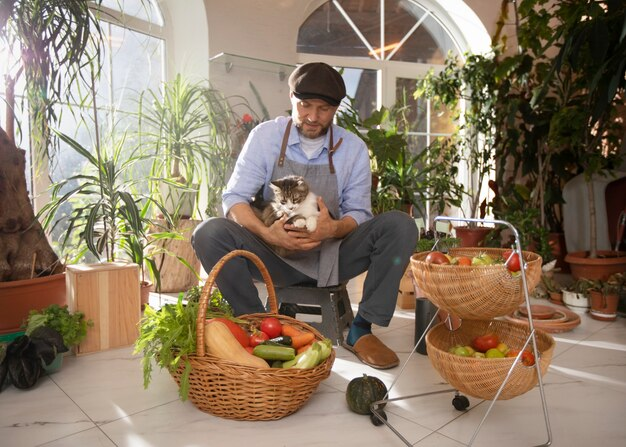
Growing your own food is one of those “it sounds so complicated but once you get going, it’s not as bad as you think” tasks. Many people who actually try it find that it’s far more manageable than they anticipated — and far more satisfying. There’s something inherently gratifying about digging into a homegrown salad (yes, even just a handful of salad leaves or some garnish herbs) that encourages people to try it. And for beginners, starting small and growing from there is the best course of action, meaning it becomes an enjoyable hobby and not a chore.
Start with Easy-To-Grow Plants
The most important thing for early success is plant choice. Easiest-to-grow, fast-yielding crops get people motivated — and if it’s easy and fun in the beginning stages, it only builds momentum. For beginners, it’s best to plan on planting salad leaves, radishes and spring onions; herbs like basil, chives and parsley tend to germinate quickly, require minimal attention and provide beginners with something ready to harvest within three or four weeks, not months.
Tomatoes and courgettes are also beginner favorites — they’re forgiving, produce well and give growers something substantial enough to create a meal instead of just sprinkling on some seasoning. But the key to success is not growing too many plants at once. A few well grown plants are much more rewarding than a laundry list with which a grower becomes overwhelmed and nothing turns out.
Assess Your Space Honestly
Before rushing to the store to buy seeds or compost, it always pays off to take stock of the space available — and the amount of light it gets. Most edible crops require at least five or six hours of direct sunlight a day, so pinpointing where the sunniest spots are (in the garden, balcony or within the house) is always the best first step.
For those with very limited outdoor space, vertical growing systems are a genuinely useful option. The best tower garden setups allow growers to cultivate a surprising range of crops in a compact footprint, making fresh food production possible even in flats or homes with no garden at all. It’s worth researching what’s available to find a system that suits the space and the crops you want to grow, as designs and capacities vary quite a bit between different options.
Soil and Growing Medium Matter More Than You Think
One common beginner oversight is realizing that good growing medium matters. Crops grown in poor soil (and old, worn out compost) will not flourish, despite how well they’re watered or cared for. Most beginners do not start with raised beds or in-ground growing but container growing — a good quality peat free compost makes a difference in how well the plants thrive.
For raised beds or in-ground growing, getting soil amended with compost or well-rotted manure prior to planting gives crops a much better head start. It’s not complicated — a good growing medium with drainage and space for roots is all most plants need to get going.
Water — Not Too Much, Not Too Little
Watering probably presents the most confused beginners when it comes to food production. People often love to overwater — if a plant droops a bit it’s natural to want to give it a drink, but the reality is, many times it’s getting too much water instead. With edible crops, it pays off to water deeply but less frequently instead of smaller amounts daily.
It’s worth learning how much water beforehand by checking the soil before watering. If the top inch is dry, water. If it’s still damp, give it another day. Container-grown plants dry out faster than those in the ground, so they’ll need more regular attention, particularly during warmer spells or in south-facing spots that heat up quickly through the day.
Record-Keeping Helps Over Time
Keeping even basic records of what was sown, when it was sown and how well it turned out comes in handy — especially within the first year or two of trying out your own food production. It doesn’t have to be complicated — simple notes on paper or notes apps on phones work great. But over time, this helps plan down the line to avoid mistakes and learn what works best.
Everyone has failures along the way and that’s part of learning. When a crop doesn’t turn out as expected this is merely information for the next attempt. Those who keep trying and stay encouraged develop reliable, effective setups for year-long fresh food access. Starting is the hardest part — after that it’s only easy!
