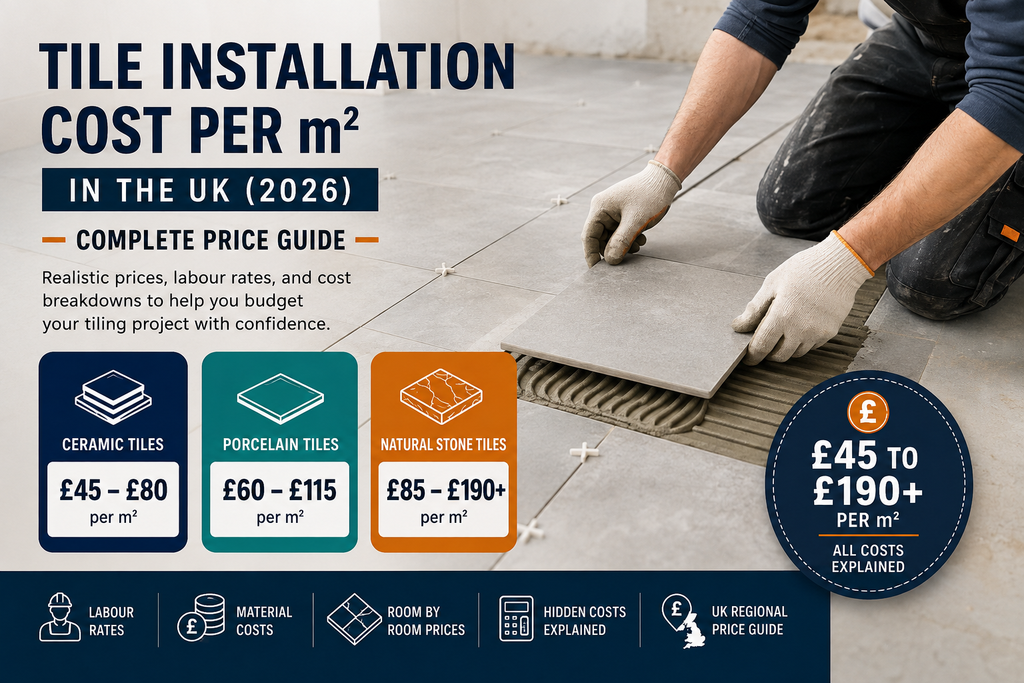
If you’re planning a tiling project, the fastest way to budget is this: most UK tiling projects cost between £45 and £190+ per m², depending on tile material, pattern complexity, and where in the UK you’re based. Ceramic tiles sit at the lower end, natural stone at the top, and labour typically makes up 40-60% of the total bill.
This guide breaks down exactly what drives that price, room by room, so you can budget accurately before you start.
What Is the Average Cost of Tile Installation per m² in the UK?
The average cost of tile installation in the UK ranges from £45 to £190+ per square metre, combining tile price, labour, and materials such as adhesive and grout.
| Tile Type | Total Cost per m² (Tile + Labour + Materials) |
| Ceramic tiles | £45 – £80 |
| Porcelain tiles | £60 – £115 |
| Natural stone tiles | £85 – £190+ |
Prices vary by region, with London and the South East typically running 15-25% higher than the UK average due to demand and cost of living.
How Much Does Tiling Labour Cost per m² in the UK?
Tiling labour alone typically costs £25-£70 per square metre, depending on the tile material and how difficult the installation is.
| Tile Type | Labour Cost per m² |
| Ceramic tiles | £25 – £40 |
| Porcelain tiles | £35 – £55 |
| Natural stone tiles | £45 – £70 |
Large-format tiles and decorative patterns such as herringbone or chevron push labour costs toward the top of these ranges, since they require more precise cutting and alignment.
Why Does Natural Stone Cost More to Install Than Ceramic?
Natural stone tiles are heavier, less uniform in shape, and more prone to chipping during cutting, which means installers work more slowly and carefully. This extra time and skill is reflected in the higher labour rate.
What Do Tilers Charge in the UK: Day Rate vs Hourly Rate?
UK tilers typically charge either a day rate of £150-£300+ or an hourly rate of £25-£50, depending on the job size and their location.
| Charging Method | Typical Rate |
| Day rate (standard UK) | £150 – £250 |
| Day rate (London) | £250 – £300+ |
| Hourly rate | £25 – £50 |
A professional tiler can usually install 8-12 m² of floor tiles per day, so day rates tend to work out cheaper than hourly rates on larger jobs.
Should I Hire a Tiler by the Day or by the m²?
For small jobs (under 10 m²), an hourly or per-m² rate is usually more cost-effective. For larger jobs, a day rate often works out cheaper once you factor in the tiler’s typical daily output.
Bathroom Tiling Cost UK: What Should You Budget?
A full bathroom tiling project in the UK typically costs £800-£1,500+, while a small bathroom floor alone can be tiled for £250-£400.
| Project | Estimated Cost |
| Small bathroom floor (5 m²) | £250 – £400 |
| Full bathroom tiling | £800 – £1,500+ |
| Wet room installation | £1,000 – £1,500+ |
Wet rooms cost more because they require additional waterproofing (tanking) before tiling begins. Porcelain and anti-slip tiles are the most common choice for bathroom tiles for floors, thanks to their durability and moisture resistance.
Kitchen Floor Tiling Cost UK: Price by Room Size
Kitchen floor tiling in the UK typically costs £500-£1,200+, scaling with the size of the room.
| Kitchen Size | Estimated Cost |
| Small kitchen (10 m²) | £500 – £800 |
| Medium kitchen (15 m²) | £650 – £1,000 |
| Large kitchen (20 m²+) | £1,200+ |
Porcelain is the most popular kitchen floor tile in the UK because it resists stains, scratches, and moisture better than ceramic – important in a room with heavy daily foot traffic.
What Hidden or Additional Costs Should I Budget For?
Beyond the tile and base labour cost, most tiling projects include several additional costs that are easy to overlook when budgeting.
Adhesive and Grout Costs
Installation materials such as adhesive and grout typically add £10-£20 per m² to the total project cost.
Surface Preparation Costs
If your floor or wall isn’t level, preparation work adds £5-£15 per m² and may include:
- Floor levelling (self-levelling compound)
- Waterproofing (tanking), especially in wet rooms
- Removing old tiles or flooring
Old Tile Removal Cost
Removing existing tiles before new installation costs £10-£30 per m², depending on how difficult they are to lift and whether the substrate needs repair afterward.
Cost of Complex Tile Patterns (Herringbone, Chevron, Mosaic)
Decorative layouts increase labour time by 40-60% compared to a standard straight lay, because each tile requires precise cutting and alignment rather than being placed in a simple grid.
What Factors Affect Tile Installation Cost in the UK?
Five main factors determine the final price of a UK tiling project:
- Tile material – Porcelain and natural stone require more precision and time than ceramic.
- Tile size – Large-format tiles need specialised tools, levelling systems, and extra care to prevent lippage.
- Pattern complexity – Herringbone, chevron, and mosaic layouts significantly increase cutting and labour time.
- Room shape – Rooms with multiple corners, niches, or obstacles (like islands or pipework) require more cuts and more time.
- Location in the UK – Labour rates are highest in London and the South East, and generally lower in the North and rural areas.
How Can I Reduce My Tiling Costs?
You can meaningfully reduce tiling costs without compromising on quality by adjusting a few key decisions before work starts.
- Choose medium-sized, standard tiles. They install faster than large-format or mosaic tiles, which lowers labour cost.
- Use a simple straight-lay pattern. Straight lay is the cheapest and fastest layout to install; diagonal and herringbone patterns cost more.
- Buy tiles in advance. Ordering early avoids rushed decisions, supply delays, and last-minute substitutions at a higher price.
- Work with a reliable supplier. Sourcing durable, well-made tiles reduces the risk of cracking, staining, or needing an early replacement.
Tiling Cost FAQs
How much does it cost to tile a 20m² floor in the UK? At £45-£190+ per m², a 20m² floor typically costs £900-£3,800+, depending on whether you choose ceramic, porcelain, or natural stone tiles.
Is it cheaper to tile a floor yourself? DIY tiling saves the £25-£70 per m² labour cost, but mistakes with levelling, spacing, or cutting can be expensive to fix – professional installation is usually recommended for bathrooms and wet areas where waterproofing matters.
How long does it take to tile a room in the UK? A professional tiler installs roughly 8-12 m² of floor tiling per day, so a 15m² kitchen floor typically takes 1.5-2 days, plus drying time before grouting.
Do tiling quotes usually include materials? Most UK tiler quotes include labour and basic materials like adhesive and grout, but tiles themselves, floor preparation, and old tile removal are often quoted separately – always confirm what’s included before booking.
What is the cheapest type of tile to install in the UK? Standard-sized ceramic tiles laid in a straight pattern are the cheapest to install, with total costs (tile plus labour) typically starting around £45 per m².
Final Thoughts
UK tiling costs in 2026 typically range from £45 to £190+ per square metre, with the total driven mainly by tile material, layout complexity, and regional labour rates. Ceramic tiles remain the most budget-friendly option, while porcelain offers a strong balance of cost and durability, and natural stone commands a premium for its look and longevity.
Getting an accurate budget means accounting for the full picture – tile price, labour, adhesive and grout, and any surface preparation – rather than the tile cost alone. Exploring tile collections from trusted retailers such as Elliren Tiles can help you compare styles, materials, and price ranges before finalising your renovation plans.
