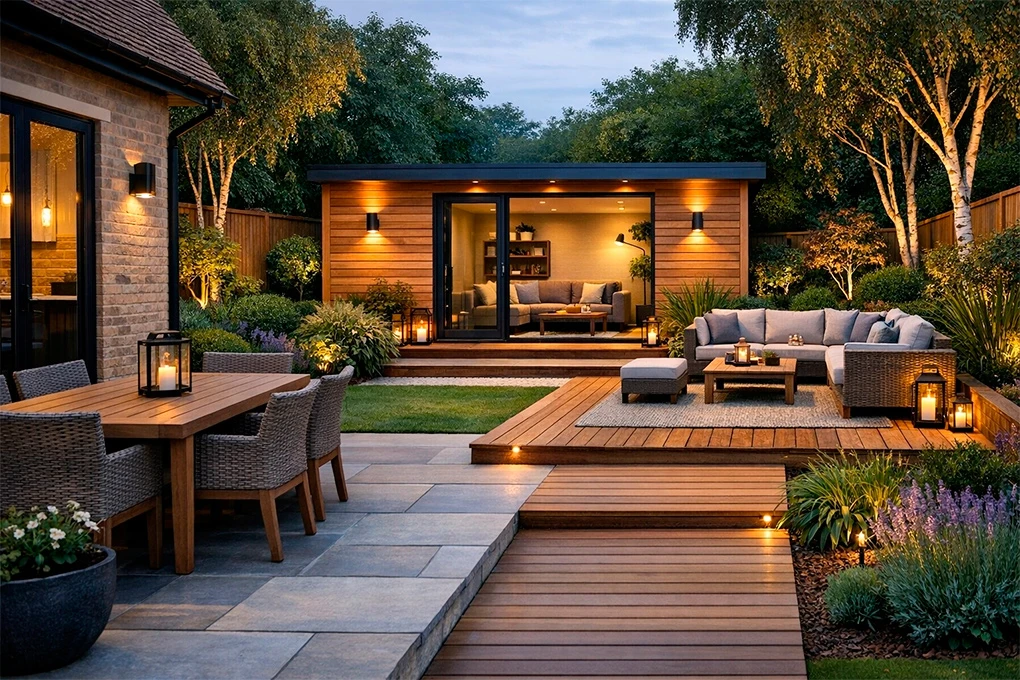
Outdoor living has become a natural extension of the home. Instead of a lawn you occasionally mow and a patio you use three times a year, more homeowners are turning their gardens into second living rooms – places to work, relax and entertain.
The problem is, many plots feel disconnected: a patch of grass here, a tired patio there, an old shed in the corner. To unlock the full potential of your outdoor space, you need to treat it like a room: with structure, focal points and a clear layout.
A garden house paired with well‑chosen furniture can do exactly that, turning an underused garden into a cohesive outdoor living space that looks good and adds real value to your home.
Start With a Clear Purpose for Your Outdoor Space
Before you think about cladding or cushions, decide what this space is for.
Ask yourself:
- Do you mainly want dining and entertaining – long evenings around a table, barbecues, parties?
- Do you need a quiet place to work or read, away from the main house?
- Is your priority a family‑friendly space, with room for children to play while adults relax nearby?
- Or do you want a flexible mix – a daytime office that becomes an evening lounge?
Your answers will guide:
- the position and size of the garden house;
- the type of furniture (dining set, lounge seating, or both);
- the lighting and accessories that support how you actually live outdoors.
Using a Garden House as the Focal Point of Your Design
A garden house is far more than a nicer shed: it can be the architectural anchor for your entire garden layout.
Instead of hiding it behind a tree, treat it as a small pavilion or studio:
- Place it where it creates a strong view from the house.
- Align paths or sightlines so the eye is naturally drawn towards it.
- Orient windows and doors towards the best light and views.
Well‑proportioned, modern wooden garden houses in England can act as home offices, studios or guest rooms, turning an unused corner into high‑value living space and a clear visual focal point. Brands like Woodera focus on making these buildings feel like small, well‑designed rooms rather than temporary cabins, which is crucial if you want your outdoor area to look intentional.
Think of the garden house like a fireplace or feature wall indoors: paths, planting and furniture should help to frame and enhance it.
Plan Zones, Circulation and Sightlines
Once you know where your garden house sits, organise the rest of the garden around it so the space feels logical and easy to use.
Define Zones
Most successful outdoor layouts include three broad areas:
- Near the house – a terrace or patio functioning as an extension of your kitchen or living room.
- The middle – lawn or planting that provides breathing room and softness.
- Around the garden house – a more intimate zone that can act as a second living room, studio or retreat.
You can mark these with subtle changes in paving, levels or planting, without chopping the space into tiny pieces.
Think About Movement and Views
- Is there a clear, comfortable route from the back door to the garden house in all weathers?
- Do paths encourage you to use the whole garden, or is there a dead area no one visits?
- What do you see from inside the house, from the garden house and from the main seating area?
Use trees, screens or tall planters to hide bins and tired fences, and to frame more attractive views like planting, a firepit or a well‑dressed seating zone.
Choosing Materials and Colours That Work Together
Cohesive design comes from repeating a limited palette of materials and colours.
Materials
Try to echo the same two or three materials across:
- Decking or paving – timber, composite, stone or porcelain.
- Garden house cladding – usually timber, sometimes mixed with metal or render.
- Furniture – wood, metal, rattan or a considered combination.
For instance, you might choose:
- warm timber cladding on the garden house;
- matching‑tone decking outside;
- black metal on lighting, planters and furniture frames.
That repetition makes the space feel planned rather than thrown together.
Colours
To link house and garden:
- repeat a key tone from the main property (brick, render, window frames) in the garden house trim, pots or textiles;
- or deliberately contrast (for example, a dark charcoal garden house against a pale brick home) but echo that dark shade in furniture, fences or accessories.
A restrained base palette with one or two accent colours is usually easiest to live with long term.
Furniture: The “Interior Design” of Your Garden
If the building is your architecture, the furniture is your interior design – just outdoors.
Match Furniture to Function
- For dining‑led spaces, prioritise a generous table, comfortable chairs and plenty of circulation space.
- For lounging, look for sofas, armchairs, coffee tables and possibly a firepit or heater.
- For flexibility, modular seating that can be rearranged works well when you switch between family time and entertaining.
Why Timber Furniture Works So Well
Wooden furniture is particularly effective for cohesive outdoor schemes:
- it feels warm and tactile;
- it picks up the tones of decking, fences and the garden house itself;
- it sits naturally among planting and greenery.
Think of the terrace and the area around the garden house as an outdoor living room. By choosing durable, weather‑resistant wooden garden furniture in the UK, you can echo the timber tones of the building and create a unified look that feels deliberate rather than improvised. Collections from brands like Woodera are designed to sit comfortably alongside timber garden structures, which makes coordination much simpler.
Lighting, Planting and Finishing Touches
With the structure and furniture in place, lighting and planting add depth and atmosphere.
- Lighting: path lights from house to garden house, wall lights on the building itself, and warm string lights or lanterns around seating areas create layers of usable, inviting light.
- Planting: repeat key species along paths and around the garden house to pull everything together; frame doors and windows with climbers or statement pots so the building feels rooted in the garden.
- Details: outdoor rugs, cushions, throws, side tables and lanterns turn a good layout into a genuinely comfortable outdoor room.
Final Thoughts: Cohesion That You Actually Use
A cohesive outdoor living space is more than a pretty view. When a well‑placed garden house, clear zoning, coordinated materials and comfortable furniture all work together, your garden becomes a true extension of your home.
The result is an outdoor area you actually use for work, relaxation and entertaining, and a property that feels larger, more flexible and more valuable, both to live in and when it’s time to sell.
