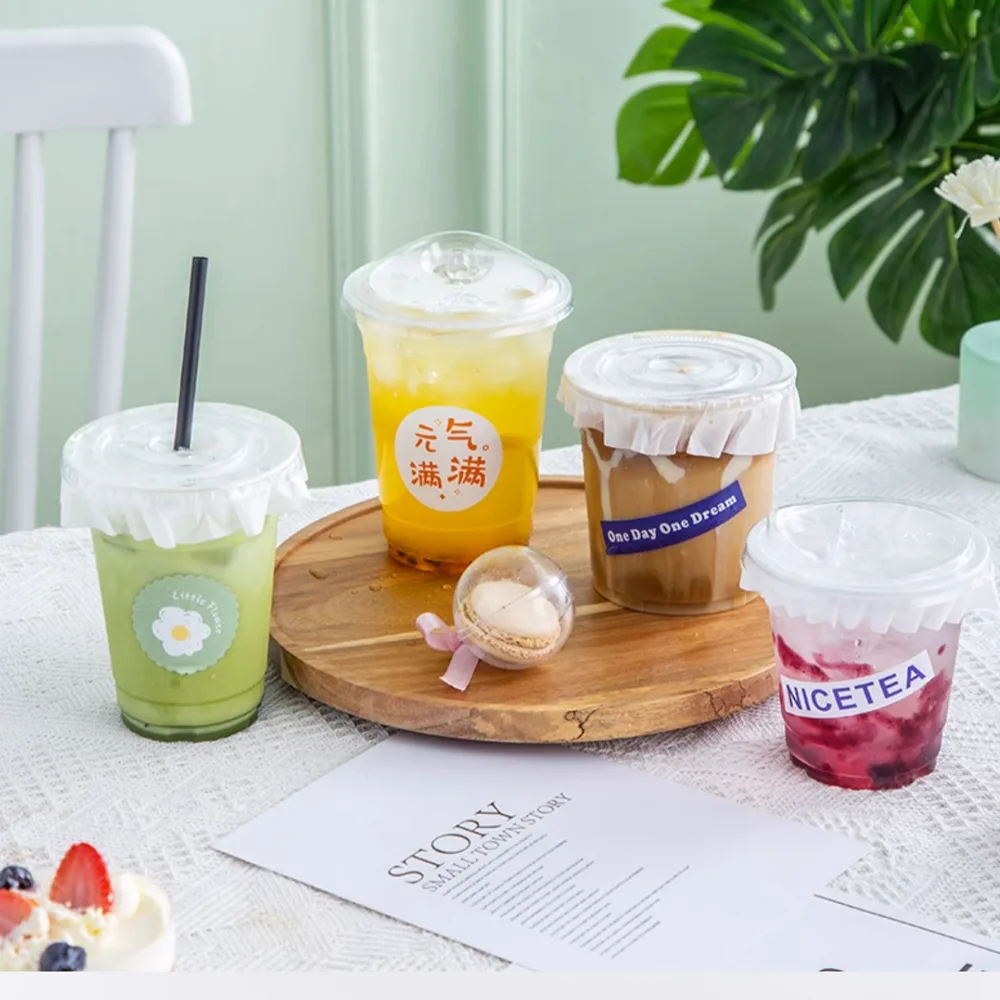
Introduction
In an era when environmental consciousness is no longer optional but imperative, the packaging industry is undergoing a fundamental shift. For beverage brands, cafes, and foodservice operators, compostable cups—especially those made of PLA (polylactic acid)—are emerging as one of the most viable solutions for reconciling convenience with sustainability.
This article explores:
- The current trends and data behind compostable cup adoption,
- The environmental, technical, and logistical challenges and opportunities,
- How one Chinese manufacturer—Bioleader—is scaling up to lead in this space,
- Practical takeaways for brands and distributors seeking a robust partner.
By the end, we’ll circle back to how compostable PLA cups represent not just a trend, but a structural pivot in the disposable drinkware industry.
1. Product Trends & Market Momentum
1.1 Escalating Market Growth
Demand for disposable drinkware remains strong globally. According to Grand View Research, the global disposable cups market was estimated at USD 17.40 billion in 2024 and is projected to grow to USD 22.14 billion by 2030 (CAGR ~3.7 %) Grand View Research. Another projection by Precedence Research suggests the market could expand to USD 33.25 billion by 2034 at a CAGR of 7.24 %.
However, within that broad market, the biodegradable / compostable cups segment is growing faster. Allied Market Research estimated the global biodegradable cups market at USD 458.1 million in 2021, with a forecast to reach USD 1.1 billion by 2031 (CAGR ~8.5 %) alliedmarketresearch.com. More recently, a 2024 report shows the biodegradable cup market grew from USD 643.76 million in 2023 to USD 674.72 million in 2024, and is projected to reach USD 917.61 million by 2030 (CAGR ~5.19 %).
As regulatory pressure mounts globally against single-use fossil plastics, more foodservice players are shifting toward sustainable disposables.
1.2 Why PLA (Compostable Plastic Cups) Are Gaining Traction
PLA is a plant-based polymer derived from renewable feedstocks (e.g. corn starch, sugarcane) and offers favorable characteristics compared to conventional petrochemical plastics. Some advantages:
- Lower carbon footprint: A life-cycle study by Bioleader (cited on their site) states that PLA can deliver up to 75 % lower carbon emissions compared to many fossil-based plastics under certain conditions.
- Reduced fossil fuel depletion: Comparative LCA studies show that PLA-based single-use cups can reduce fossil fuel use by ~41 % relative to PP or PET equivalents.
- Competitive environmental performance: In cradle-to-grave analyses, PLA cups often outperform PET cups in climate change impact, even when land use change is factored.
Real-world application is aided by transparency: PLA is clear, rigid, stackable, and compatible with standard beverage operations.
To see several models of clear, rigid PLA cups in one unified catalogue, visit Compostable PLA Cups – Bioleader product category:
https://www.bioleaderpack.com/product-category/compostable-pla-cups-clear/
That page offers a full view of the variety (8 oz, 12 oz, 16 oz, etc.) and helps buyers compare side by side.
1.3 Differentiation and Product Variety
As more suppliers enter the compostable segment, differentiation becomes key. Important axes include:
- Clarity and gloss (optical quality)
- Wall thickness and mechanical strength
- Compatibility with sealing films and lids
- Barrier resistance (for carbonation, moisture, oxygen)
- Temperature tolerance and anti-fog coatings
- Printing and customization (branding, logos)
- Certification credentials (e.g. EN 13432, ASTM D6400, OK Compost)
Bioleader offers a broader spectrum beyond just clear cups. Their Compostable Plastic Cups line demonstrates their capacity for opaque, coated, or specialty variants:
This depth allows them to serve diverse beverage and foodservice use cases, from cold drinks to slushies and even mild warm drinks.
This kind of catalogue helps B2B buyers evaluate volume options directly.
2. Environmental & Industry Imperatives
2.1 Environmental Benefits: Reality vs. Hype
While PLA and compostable cups are promising, their true impact depends heavily on proper systems for collection, composting, and waste management. Key points:
- End-of-life treatment matters: According to a UNEP / LCA comparative study, manufacturing contributes the largest share to the life cycle impacts for single-use cups, but the fate of the cup (recycling, landfill, composting) also heavily influences total emissions.
- Trade-offs exist: Some studies (e.g. using experimental data) indicate that in some impact categories, polypropylene cups may show lower impacts than PLA, especially when composting or waste systems are inefficient.
- Regional conditions matter: Local energy mix, transportation distances, waste infrastructure, and composting quality all influence net benefits.
Nevertheless, in many temperate/industrialized contexts, PLA cups can deliver net benefits in climate change, fossil fuel use, and reduced plastic pollution risk.
2.2 Policy & Consumer Pressure Driving Transition
- Plastic bans and levies in European, North American, and East Asian jurisdictions are pushing foodservice operators to adopt alternatives.
- Consumers, especially Gen Z and Millennials, increasingly expect ESG-aligned brands and are willing to pay incremental premiums for greener packaging.
- Many multinational brands now highlight sustainability in packaging as part of corporate ESG goals and marketing narratives.
- Waste management and composting infrastructure is expanding in urban zones, enabling closed-loop systems for compostable disposables.
2.3 Barriers & Practical Challenges
- Cost premium: Compostable cups generally cost more than conventional PET or PP cups — brands must absorb or pass on that differential.
- Infrastructure gaps: In many markets, industrial composting facilities are scarce; PLA cups may end up in landfill or incineration, undermining benefits.
- Contamination risk: Mixing compostables with conventional plastics can disrupt recycling streams or composting processes.
- Certification credibility: Some eco-claims are weak or greenwashed; buyers must demand proof of compostability and compliance.
- Consumer confusion: “Biodegradable” or “compostable” may be misinterpreted as meaning breakdown in backyard or marine environments, which is often false.
For beverage and packaging brands, success depends not just on adopting compostable cups, but aligning supply, logistics, waste systems, and messaging in a coherent ecosystem.
3. Bioleader: A Chinese Manufacturer Carving Leadership in Compostable Cups
3.1 Why a Chinese Manufacturer Matters
China holds advantages in plastics and polymer supply chains: scale, cost, upstream chemical feedstock access, and mature component manufacturing. But transitioning that strength into credible, high-quality compostable cup production demands mastery of materials, quality controls, certification, and global export compliance.
Bioleader is an example of a firm that has built capabilities across that stack—from raw material sourcing to finished goods packaging and international logistics.
3.2 Bioleader’s Positioning & Product Ecosystem
Bioleader today offers several complementary product lines, beyond just clear PLA cups:
These offerings allow Bioleader to serve different beverage types (cold, carbonated, water, etc.) and aesthetic preferences.
Key strengths & differentiators:
- Vertically integrated / in-house controls: From polymer sourcing, compounding, film/coating, molding, and quality assurance
- Certification portfolio: Products are aligned to recognized compostability and food-contact standards
- High clarity & performance: They offer optical clarity and sealing compatibility comparable to PET
- Scalability & bulk supply: Their bulk wholesale full-size compostable cups page signals readiness to serve large clients.
- Customer feedback & presence: They serve international buyers, exhibit at trade shows, and accumulate positive reviews
- Brand storytelling: They consistently position themselves as a “factory + solution provider” rather than just a trading company
Because of these attributes, Bioleader is well placed to appeal to global brands, regional distributors, and mid-tier beverage operators.
3.3 Case Use & Client Value
- Some beverage operators have reported that switching to Bioleader’s compostable cups allowed them to market “zero waste” or “eco-cups” campaigns, enhancing brand perception among sustainable-conscious consumers.
- For operations scaling across regions, choosing a supplier that maintains consistent quality, compliance, and logistical reliability is critical—and Bioleader’s vertically integrated model helps minimize variability.
- Their flexible customization—logos, printing, film compatibility—makes them attractive for co-branding, promotional, and seasonal uses.
4. Recommended Criteria for Choosing a Compostable Cup Supplier
If you are a brand, distributor, or foodservice operator considering a compostable cup partner, apply the following lens:
4.1 Certification & Transparency
Require third-party compostability certification (e.g. EN 13432, OK Compost, ASTM D6400). Demand test reports, shelf-life data, and migration data.
4.2 Material Sourcing & Control
Partners should ideally control or audit upstream sourcing of PLA or biopolymers to ensure consistency and traceability.
4.3 Quality & Performance Reliability
Test for clarity, leak resistance, mechanical integrity, sealing compatibility, fogging, barrier performance.
4.4 Scale & Supply Stability
Ensure the partner has capacity for your target volumes and backup planning for raw material fluctuations.
4.5 Customization & Technical Support
Ability to print, adapt wall thickness, handle special beverage types (carbonated, slushy, acidic), and support your technical demands.
4.6 Reputation, Client Feedback & After-sales
Look into client references, return rate metrics, quality consistency over time, and how the supplier handles complaints or logistical issues.
Given this lens, Bioleader’s product depth, control over manufacturing, and client orientation make it a strong prospective partner in compostable drinkware.
5. Conclusion: From Trend to Transformation
Compostable PLA cups are not just a marketing ploy—they reflect a deeper transformation in how society will approach convenience, disposability, and stewardship of natural systems.
Let’s revisit the arc:
- We began by seeing how the disposable cups market is expanding, but how compostable/biodegradable segments are growing faster in response to regulatory and consumer pressure.
- We then explored the environmental benefits of PLA, tempered by real-world constraints like composting infrastructure, contamination, and cost.
If you’re a brand or buyer seeking to adopt compostable drinkware, aligning with a supplier who understands materials, certifications, performance, and logistics is essential. Bioleader is one such candidate.
At the same time, adopting compostable cups is only one piece of the puzzle—you also need proper waste systems, consumer education, collection, and composting pathways for the full promise to be realized.
In short: compostable cups are the intersection of product innovation, environmental urgency, and industrial responsibility. For brands and suppliers willing to invest in quality, traceability, and systems thinking, the opportunity is not just to ride a trend—but to help define the next generation of sustainable beverage packaging.
