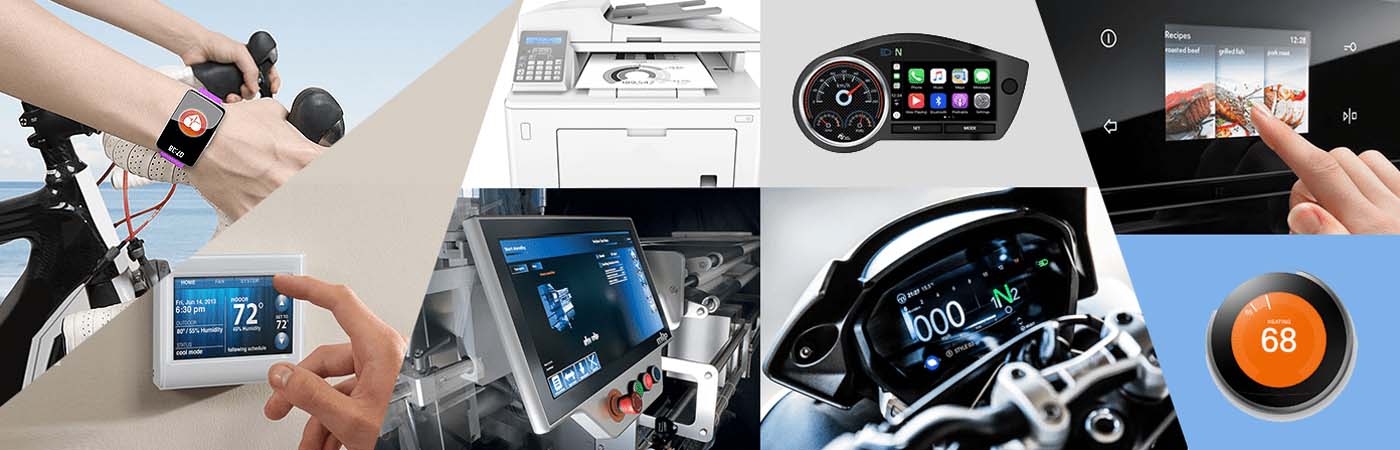
Why Your Project Success Depends on the Right Display Partner
Every electronic product tells a story to its user. The screen is where that story unfolds. When an operator touches an industrial control panel, when a driver glances at their dashboard, or when a patient reads data from a medical monitor, the quality of that interaction hinges on one critical component: the display. Yet for many engineers and procurement professionals, sourcing this component feels like navigating a maze of specifications, interface options, and quality claims.
The difference between a product that thrives in the market and one that suffers from field failures often comes down to the capabilities of the chosen LCD display manufacturer. This is not merely a purchasing decision. It is a strategic partnership that affects your time to market, your product lifecycle, and your brand reputation.
Decoding Display Technology for Professional Applications
What Engineers Need to Know About TFT LCD Modules
The liquid crystal display has evolved significantly since its inception. Today, the dominant technology for professional applications is the TFT LCD module. Unlike passive matrix displays, TFT (Thin-Film Transistor) technology assigns a dedicated transistor to each pixel, enabling faster response times, higher contrast, and superior color reproduction.
When evaluating a TFT LCD module, engineers must look beyond the basic resolution and size specifications. Critical parameters include:
Interface compatibility determines how easily the display connects to your system. Whether you need RGB, LVDS, MIPI, or HDMI interfaces, your manufacturer must support the connection standard that aligns with your processor architecture.
Optical performance encompasses brightness, contrast ratio, and viewing angles. A display destined for outdoor use requires significantly higher brightness measured in nits, often necessitating specialized backlighting solutions that only an experienced LCD display manufacturer can properly engineer.
Mechanical integration involves the physical mounting of the display within your enclosure. Tolerance stacks, bezel widths, and adhesive attachments all require careful consideration during the design phase.
The Integration Challenge: Touch Screen Display Solutions
Why Touch Changes Everything
Adding touch interactivity transforms a passive display into an active interface. However, a touch screen display introduces complexities that many development teams underestimate.
The first decision point involves touch technology selection. Projected capacitive touch offers the multi-touch responsiveness users expect from modern devices. Resistive touch provides durability and glove compatibility for industrial environments. Surface acoustic wave and infrared touch options serve specialized applications requiring optical clarity or extreme durability.
The second, often overlooked consideration is optical bonding. When a touch sensor is simply air-gapped from the TFT LCD, you create multiple reflective surfaces that degrade image quality. Sunlight readability suffers dramatically. Moisture and dust can infiltrate the gap over time.
Professional touch screen display manufacturers address this through optical bonding. This process uses transparent adhesives to laminate the touch sensor directly to the display cell. The benefits include:
- Eliminating internal reflections for better outdoor visibility
- Improving impact resistance and durability
- Preventing condensation and contamination between layers
- Enabling thinner overall module designs
CDTech Electronics has invested in optical bonding capabilities precisely because this process transforms a good display into an exceptional one suitable for demanding applications.
Surviving Harsh Environments: Industrial LCD and Vehicle Display Requirements
The Gap Between Consumer and Professional Grades
Consumer electronics operate in controlled environments. They live indoors, away from extreme temperatures, protected from vibration and shock. Professional applications face no such guarantees.
An industrial LCD must survive conditions that would destroy consumer-grade components. Factories experience temperature swings, humidity, dust, and electromagnetic interference. Outdoor installations face direct sunlight, rain, and temperature extremes. Medical environments require sterilization compatibility and absolute reliability.
The engineering requirements for industrial LCD products include:
Wide temperature operation demands components rated for -20°C to +70°C at minimum, with some applications requiring even broader ranges. Standard liquid crystal materials freeze or respond sluggishly at low temperatures. Specialized formulations and heater systems may be required.
Long lifecycle support means the manufacturer guarantees availability for five, seven, or even ten years. Consumer displays change constantly. Industrial applications require stability for certification and long production runs.
Enhanced mechanical construction involves stronger backlight units, reinforced flex cables, and robust connector retention. Vibration testing becomes mandatory rather than optional.
For vehicle display applications, the requirements intensify further. Automotive environments combine wide temperature extremes with constant vibration, direct sunlight exposure, and stringent safety requirements. A vehicle display must remain readable while the sun shines directly on it. It must dim automatically at night without distracting the driver. It must survive decades of thermal cycling without delamination or failure.
Automotive-grade displays typically require IATF16949 certification, proving the manufacturer maintains the rigorous quality systems the automotive industry demands. CDTech holds this certification, enabling them to supply vehicle display solutions that meet OEM requirements.
Breaking the Standard Mold: Custom and Bar Type LCD Solutions
When Off-the-Shelf Components Limit Innovation
Standard display sizes serve high-volume applications well. But innovation often requires deviation from the ordinary. Product designers seeking differentiation increasingly turn to custom form factors.
The bar type LCD exemplifies this trend. These ultra-wide displays, with aspect ratios far exceeding standard formats, enable new product categories:
- Digital signage that displays information in narrow spaces
- Automotive mirror replacements showing camera feeds
- Industrial equipment with dedicated status bars
- Retail shelf-edge labels with dynamic pricing
Developing a bar type LCD requires a manufacturer capable of custom glass design, not merely assembling standard cells. The driving electronics, backlight design, and mechanical integration all require engineering attention.
Beyond form factor, customization extends to:
Optical enhancements such as custom polarizers for circular polarization or reduced reflectance. Anti-glare and anti-fingerprint coatings tailored to specific use cases.
Backlight engineering to achieve specific brightness targets, color temperatures, or uniformity requirements. Some applications need dual brightness modes for day and night operation.
Cover glass integration with custom printing, curved surfaces, or specialized strengthening. The display becomes part of the industrial design, not merely a component hidden behind a bezel.
The Procurement Perspective: Evaluating an LCD Display Manufacturer
Beyond the Datasheet: What Certifications Actually Mean
Procurement professionals face the challenge of comparing suppliers across multiple dimensions. Price matters, but it represents only the beginning of the total cost equation.
Certifications provide objective evidence of manufacturing capability. When a LCD display manufacturer holds ISO9001, it demonstrates fundamental quality management. ISO14001 shows environmental responsibility. But for specialized applications, industry-specific certifications carry greater weight.
ISO13485 certification indicates the manufacturer understands medical device requirements: traceability, cleanliness, and risk management. IATF16949 demonstrates capability for automotive production with its emphasis on defect prevention and supply chain control.
CDTech maintains all these certifications, signaling their readiness to serve demanding markets with consistent quality.
The One-Stop Manufacturing Advantage
Sourcing displays, touch sensors, and cover glass from separate suppliers creates coordination challenges. Tolerances accumulate. Responsibility for failures becomes unclear. Lead times multiply.
A manufacturer offering one-stop production eliminates these headaches. When the same facility produces the TFT LCD module, applies the touch screen display technology, and performs optical bonding, quality control becomes unified. If issues arise, a single conversation resolves them.
This integration capability particularly benefits custom projects where standard interfaces between components do not exist. The engineering team can optimize the entire stack rather than working within predefined boundaries.
Making the Technical Decision
Questions Every Engineering Team Should Ask
Before selecting an LCD display manufacturer, your team should gather specific information:
What is the product lifecycle expectation? Ensure the manufacturer commits to supporting your production timeline, including potential years of spare parts availability.
How does the manufacturer handle end-of-life notifications? Professional suppliers provide advance notice and last-time-buy opportunities when components must change.
What testing validates performance claims? Request data on temperature cycling, vibration resistance, and optical measurements performed during qualification.
Can the manufacturer support interface requirements? Verify that interface options match your processor selection and that necessary documentation and support exist.
What customization capabilities exist? Determine whether the manufacturer can modify backlights, integrate touch, or adjust mechanical features to suit your design.
