Building a private data center or expanding an existing server room requires significant investments, time, and ongoing maintenance costs. This is exactly when colocation becomes an attractive solution for businesses that want to grow without excessive capital expenditures and the risks associated with managing physical infrastructure.
Colocation allows companies to place their own equipment in a professional data center, gaining access to enterprise-grade reliability, security, and network connectivity. The business retains full control over its hardware while offloading the responsibility for power, cooling, physical security, and 24/7 facility operations. This approach helps organizations scale quickly, optimize their budget, and ensure high availability for the services that support business growth.
Core components of colocation
Rack space
The client rents physical space — from a single unit (U) to full racks or dedicated cages. This simplifies scaling: a company can start small and gradually expand as its needs grow.
Power supply
Data centers use redundant power lines, multiple layers of uninterruptible power systems, and generators. This reduces the likelihood of downtime, which is common in local server rooms.
Cooling and climate control
Industrial-grade cooling systems maintain stable temperature and humidity, extending equipment lifespan and preventing overheating.
Network infrastructure
Data centers are connected to multiple carriers, allowing clients to choose optimal routes and reduce latency. Customers gain access to high-speed uplinks, private network options, and direct interconnections.
Physical security
The facility is protected by multi-level access controls, video surveillance, alarm systems, and 24/7 on-site personnel.
How colocation differs from other models
- From the cloud. In the cloud, virtual resources are rented, whereas in colocation the client rents physical space for their own hardware. The business retains full control over equipment and data.
- From managed hosting. In managed hosting, the server is owned by the provider. In colocation, it is owned by the client.
- From on-premises. Colocation eliminates the costs of facilities, engineers, power systems, and cooling, while maintaining a level of control close to on-premises infrastructure.
Core benefits of colocation for growing businesses
For a growing business, colocation is not just an alternative to on-premises infrastructure but a strategic solution that combines full control over hardware with the reliability of a professional data center. Below are the key advantages that make this model especially appealing.
Cost efficiency and predictable expenses
One of the main benefits of colocation is the reduction of capital expenditures. Companies do not need to invest in building a server room, cooling systems, uninterruptible power supplies, or upgrading electrical infrastructure.
Expenses become predictable and easy to plan: the business pays a fixed fee for rack space and energy usage, avoiding large one-time investments. This is especially important for rapidly growing companies that want to direct their budget toward product development rather than infrastructure.
Enterprise-grade reliability
Data centers use redundancy across all critical systems: power, cooling, networking, and engineering infrastructure. Reliability levels correspond to certifications such as Tier III–IV.
For companies, this means minimal downtime, stable service performance, and significantly higher availability compared to on-premises setups, where failures due to overheating, power outages, or network disruptions occur far more frequently.
Physical and data security
Colocation facilities provide strict access control: biometrics, key cards, secured perimeters, video surveillance, and 24/7 on-site personnel. Additional protection includes fire suppression systems, equipment monitoring, and compliance with international information security standards.
For companies handling sensitive data, colocation offers a way to ensure a high level of protection without maintaining physical security on their own.
Scalability and flexibility
Colocation is ideal for businesses that grow irregularly or in sudden bursts. A company can start with a few units, then move to a full rack or multiple racks — without relocation or changes to engineering infrastructure.
This flexibility allows organizations to scale as quickly as application demands grow: adding servers, changing configurations, or installing new equipment as needed.
Network carrier diversity
Professional data centers are connected to multiple carriers and IX platforms, which makes it possible to:
- reduce latency;
- enhance network redundancy;
- choose optimal routes for international traffic;
- establish direct connections to partners and cloud platforms.
For global or geographically distributed services, this provides a significant competitive advantage.
Full hardware ownership and control
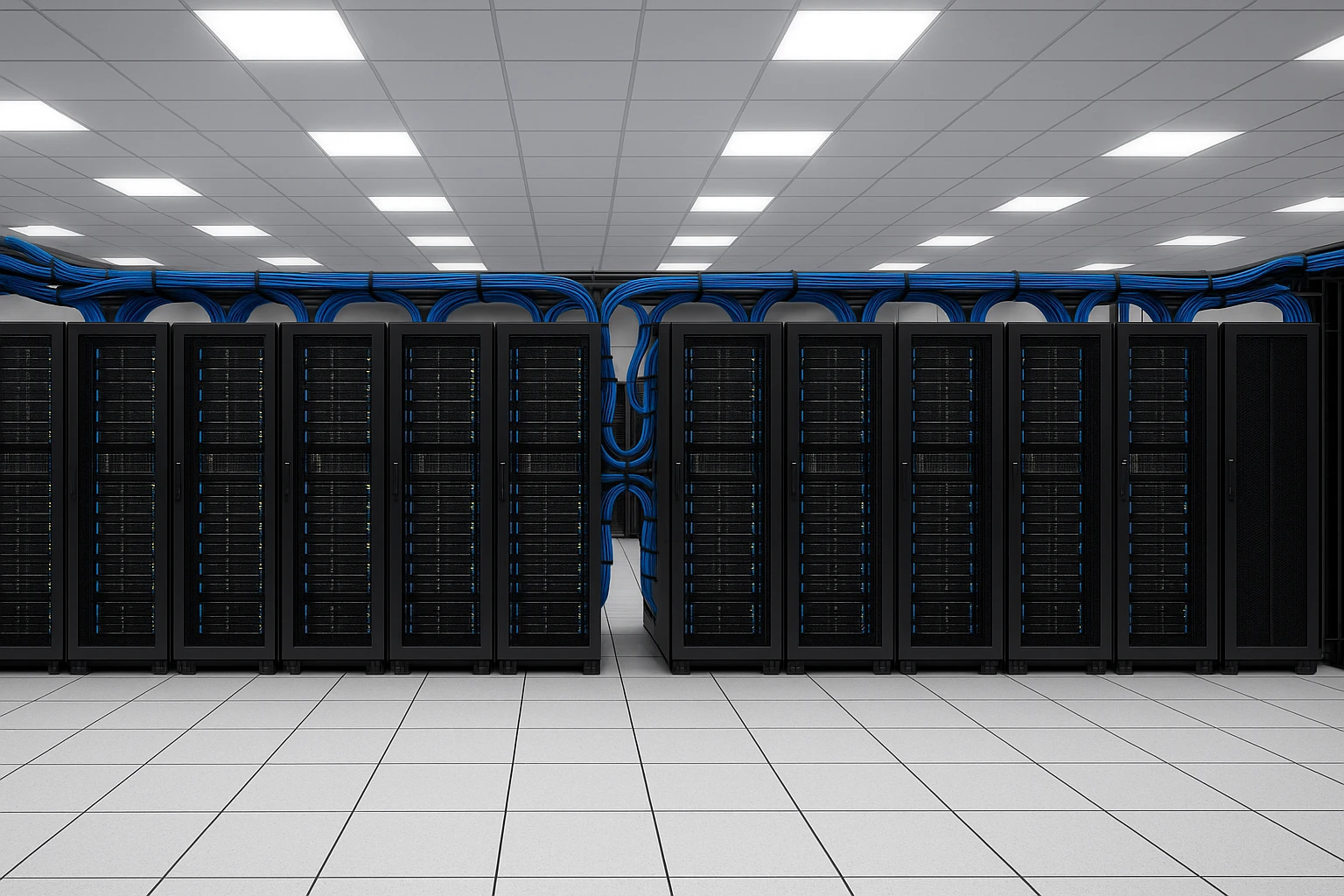
Unlike the cloud, where infrastructure is virtualized, colocation preserves full ownership and control over hardware for the client. The company selects its own server configurations, networking equipment, and storage systems.
This is especially valuable for projects requiring non-standard configurations, hardware accelerators, specific tuning, or strict compliance requirements. The business owns the hardware but relies on a reliable facility to offload operational tasks related to housing and maintaining it.
Colocation vs cloud vs on-premises
For a growing business, it is important to understand how colocation differs from cloud solutions and traditional on-premises infrastructure. Each model has its strengths, but colocation often becomes the optimal compromise between control, cost, and scalability.
Colocation vs cloud
Cloud platforms provide virtual resources that can be scaled quickly, but they remove full control over hardware and may lead to unpredictable expenses as workloads increase.
Colocation, by contrast, allows companies to use their own hardware and maintain a transparent cost structure. This is particularly beneficial for projects with steady, predictable workloads, where cloud resources become more expensive over time. In addition, some businesses cannot place sensitive data in public clouds due to compliance requirements — colocation solves this issue.
Colocation vs on-premises
Hosting equipment in an office or a private server room provides maximum physical control but requires significant capital investments: building infrastructure, cooling systems, power supply, fire protection, and on-site engineering staff.
Colocation eliminates these expenses. A company gains industrial-grade reliability and physical security while retaining full ownership of its hardware. Unlike on-premises setups, the power and cooling systems in a data center scale automatically without client involvement.
When the cloud is the better option
Cloud services are suitable when:
- the workload is unpredictable or grows rapidly;
- the project is in an early stage;
- rapid deployment of resources is required;
- there is no need for specific hardware configurations.
When on-premises is justified
A private facility may be necessary when:
- regulatory requirements mandate that equipment must remain on organizational premises;
- 24/7 direct physical access is essential;
- the infrastructure is small and does not need significant scaling.
Why colocation is optimal for growing companies
Colocation combines the advantages of both models:
- like on-premises — full control over hardware;
- like the cloud — high reliability and ready-to-use infrastructure without capital investment.
As a result, businesses gain a flexible, scalable, and secure platform for growth without overpaying for excess resources or risking service stability.
Typical use cases
Colocation is suitable for companies of various sizes and industries, but it is especially valuable for those experiencing active growth and increasing demands for performance, security, and control over data. Below are the most common scenarios where colocation becomes the optimal infrastructure model.
E-commerce and financial platforms
Online stores, payment gateways, billing systems, and online transaction services require high availability, low latency, and strict adherence to security standards. Colocation allows businesses to use their own hardware while gaining industrial-level protection and reliability. This is particularly important during seasonal peaks when workloads increase dramatically.
SaaS companies
SaaS providers often need predictable infrastructure to ensure continuous operation of their applications. Colocation delivers a stable environment for hosting their entire stack — from databases to API services. The ability to scale racks as the user base grows makes this model ideal for long-term development.
Media, streaming, and gaming
Companies working with streaming video, audio, live platforms, or gaming services require high bandwidth and minimal latency. Data centers with carrier diversity and direct connections help reduce latency and improve service quality for global audiences.
Analytics and big data
Services that process large volumes of data — telemetry, logs, IoT information, analytical datasets — often need substantial compute and storage capacity. Storage-oriented racks and the ability to deploy specialized servers make colocation a preferred choice for such workloads.
Private clouds
Companies seeking to maintain control over their infrastructure while gaining scalability and reliability use colocation to build private clouds based on Proxmox, VMware, or Hyper-V. This enables hybrid models that combine owned resources with public cloud services.
Organizations with strict compliance requirements
Certain industries — fintech, healthcare, defense, and government — cannot host data in public clouds. Colocation allows them to place their own hardware in a certified data center and comply with standards such as GDPR, ISO 27001, and SOC 2.
Fast-growing companies
Businesses experiencing rapid growth value colocation for its ability to scale resources without major investments or service interruptions. Additional servers can be deployed, racks expanded, and network architecture improved — all without building new facilities or restructuring office infrastructure.
How to choose a colocation provider
Selecting a facility for hosting servers directly impacts the stability, security, and scalability of your infrastructure. For a growing business, it is especially important to consider factors that ensure reliability today and provide a foundation for future expansion.
Data center location
Location affects latency, ease of access, and regulatory compliance.
Key considerations include:
- proximity to primary users to minimize latency;
- convenient access for your engineers;
- compliance with local and industry-specific data storage requirements.
Reliability and Tier levels
Data centers are classified by the level of infrastructure redundancy, from Tier I to Tier IV.
For growing businesses, Tier III is typically the most suitable — offering a balance between cost and high availability.
You should evaluate:
- redundancy of power and cooling systems;
- presence of generators and UPS;
- uptime guarantees (SLA).
Power capacity and energy efficiency
Power is one of the most significant factors in total cost of ownership. It is important to look at:
- available power per rack;
- stabilization and redundancy of power lines;
- the PUE indicator, which reflects the data center’s energy efficiency.
A low PUE helps reduce operational expenses.
Network infrastructure
Network quality determines service performance and customer accessibility.
A provider should offer:
- access to multiple carriers and internet exchange points;
- high-bandwidth connections (10/40/100 Gbps);
- options for private networking and cross-connects;
- DDoS protection.
Physical security
Robust physical protection is essential for safeguarding equipment and data. This includes:
- biometric and card-based access systems;
- 24/7 video surveillance;
- on-site security and monitoring;
- fire suppression systems.
Strong physical security is especially important for companies handling confidential or sensitive information.
SLA and support conditions
It is crucial to evaluate the quality and responsiveness of the data center’s support team.
Key parameters include:
- support response time;
- availability of onsite engineers;
- transparency of maintenance processes;
- guaranteed recovery times.
Scalability capabilities
A growing business must have room to expand. It is important to ensure that the data center can provide:
- additional racks or private suites;
- increased power capacity;
- flexible options for expanding network infrastructure.
These capabilities enable infrastructure growth without migrations or downtime.
Why Colocation Supports Sustainable Growth
For companies that need predictable expenses, minimal downtime, and full control over their hardware, colocation becomes a logical step forward. As traffic grows, customer bases expand, and digital products become more complex, this type of infrastructure helps maintain service stability without excessive investment in on-site facilities.
Thanks to flexible scalability, advanced networking capabilities, and compliance with international security standards, colocation is suitable for both tech startups and mature companies operating in highly regulated industries. It is a solution that allows organizations to focus on product development and business growth while leaving the physical side of infrastructure management to professionals.
