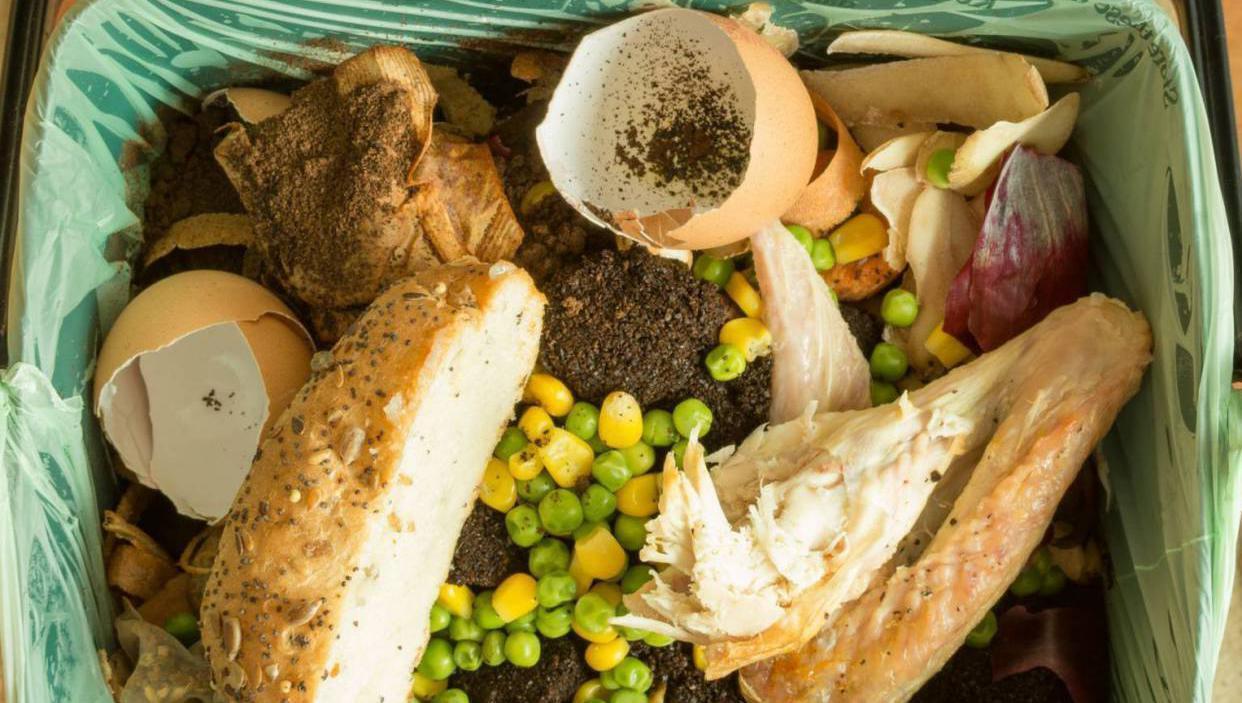
Imagine sitting down to dinner in Dublin or Belfast. Now picture one in every three plates of that meal heading straight to the bin. That’s not exaggeration — it’s the daily reality of food waste across the island. Every year, hundreds of thousands of tonnes of perfectly good food vanish into landfills, fuelling climate change and costing billions. Yet amid the grim statistics, real solutions are taking shape — turning yesterday’s scraps into tomorrow’s energy and fertiliser. This analytical deep-dive examines the hard numbers, the EU context, and how innovative collection services like Frylite are quietly leading the charge.
The Sheer Scale: Numbers That Shock
In the Republic of Ireland, the Environmental Protection Agency (EPA) estimates 835,000 tonnes of food waste were generated in 2023 — the equivalent of over one million meals thrown away every single day. That breaks down to 162 kg per person, a figure that has barely budged in recent years.
Households shoulder 221,000 tonnes (26%), while manufacturing and processing dominate at 305,000 tonnes (37%). Restaurants and food service add another 175,000 tonnes (21%). The rest comes from retail and primary production.
Northern Ireland’s data is tracked differently but paints a similar picture of household-level waste. In 2021/22, NI households alone generated 164,000 tonnes of food and drink waste — roughly 86 kg per person. While comprehensive all-sector totals are harder to pinpoint, the pattern mirrors the Republic: avoidable waste from plates, fridges and commercial kitchens adds up fast.
How Ireland Compares to the EU
Ireland is not alone in the problem — but it is performing worse than most. The EU average in 2023 stood at 130 kg of food waste per person, with the bloc generating 58.2 million tonnes overall. Ireland ranks sixth-highest per capita in the Union, roughly 10–25% above the average depending on the year measured. Countries like the Netherlands and Austria achieve noticeably lower figures through stricter prevention targets and better infrastructure.
The Hidden Climate Cost
Food waste is not just an economic or moral issue — it is a major climate culprit. When organic matter rots in landfills it releases methane, a greenhouse gas 25 times more potent than CO₂ over a 100-year period. In Ireland, earlier estimates linked roughly one million tonnes of food waste to 3.6 million tonnes of CO₂ equivalent emissions. Diverting that waste from landfill through anaerobic digestion (AD) slashes emissions dramatically while generating renewable electricity and nutrient-rich biofertiliser.
How We Are Solving It: From Problem to Power
Ireland and Northern Ireland have set ambitious targets: a 50% reduction in food waste by 2030 under the UN Sustainable Development Goal 12.3. Brown bins, awareness campaigns and new legislation banning food waste to landfill are helping, but the real momentum is coming from businesses that turn waste into resources.
Leading the practical side of the solution is Frylite. In 2023 alone, Frylite collected 8,422 tonnes of food waste from restaurants, hotels and caterers across Ireland and Northern Ireland. That single year’s effort prevented approximately 5,497 tonnes of CO₂ emissions that would otherwise have come from fossil-fuel equivalents. The collected waste is processed via anaerobic digestion into biogas for renewable electricity and heat, plus high-quality biofertiliser that returns nutrients to the soil. The electricity generated was enough to power 4,383 homes for an entire year — or 1.6 million homes for a single day.

Frylite’s service goes beyond collection. Bins are weighed individually for transparent reporting, jet-washed for hygiene, and the entire process helps businesses cut costs, meet regulations and even improve kitchen margins by analysing what’s being wasted. Packaging is separated and turned into Solid Recovered Fuel for cement production — closing every loop possible.
The Road Ahead
The numbers are still daunting, but the trajectory is encouraging. With Frylite diverting thousands of tonnes annually and governments pushing harder on prevention, the island is shifting from “waste management” to true circular economy thinking. Every chef who signs up for smart collection, every household that plans meals better, and every policymaker who tightens targets moves us closer to that 50% reduction goal.
The next time you scrape your plate, remember: that leftover risotto could have powered a home or fertilised a field. Thanks to services like Frylite, more of it now does exactly that. The problem is massive — but the solutions, tonne by tonne, are already working.
More details https://frylite.com/foodwaste/
