The agricultural sector continues to grow, and with it, the demand for high-quality fertilizers that can boost crop yield and maintain soil health. Two essential tools in modern fertilizer production are NPK fertilizer equipment and the granulator for bentonite. These machines not only streamline the manufacturing process but also ensure consistent quality and efficiency. Whether you are a small-scale producer or planning a large-scale fertilizer plant, understanding the role of these machines is crucial.
Understanding NPK Fertilizer
NPK fertilizers contain three essential nutrients: Nitrogen (N), Phosphorus (P), and Potassium (K). Each of these nutrients plays a significant role in plant growth. Nitrogen supports leafy growth, phosphorus contributes to root development and flower formation, and potassium improves overall plant health and disease resistance. Producing high-quality NPK fertilizers requires precise formulation, careful mixing, and proper granulation – tasks that are made much easier with modern NPK fertilizer equipment.
Key Components of NPK Fertilizer Equipment
Modern NPK fertilizer production lines are composed of multiple machines that work together to produce uniform granules. Key components include:
- Raw Material Batching Systems
Accurate measurement and mixing of raw materials are critical in producing NPK fertilizers. Automatic batching systems in NPK fertilizer equipment ensure the precise combination of nitrogen, phosphorus, and potassium, along with any additional micronutrients. This precision helps achieve consistent fertilizer quality. - Granulators
Granulation is a vital step in NPK fertilizer production. Granulators convert powdered materials into solid, uniform granules that are easy to handle, transport, and store. Depending on the type of NPK fertilizer, different granulation methods can be used, including rotary drum granulators, disc granulators, or double roller extrusion granulators. - Drying and Cooling Equipment
After granulation, the fertilizer granules often contain moisture, which can affect storage and transportation. Dryers and coolers in NPK fertilizer equipment remove excess moisture and stabilize granules, preventing caking and improving shelf life. - Screening Machines
Screening ensures that only granules of the desired size reach the final stage. Oversized granules are crushed and recycled, while fine particles may be returned for reprocessing. - Packaging Systems
Automatic packaging machines allow precise filling of fertilizer bags, reducing wastage and improving efficiency. Packaging systems are particularly important for commercial NPK fertilizer producers to maintain consistent product weight and quality.
By integrating these components, NPK fertilizer equipment streamlines the production process, reduces labor costs, and ensures high-quality fertilizer output.
The Role of Bentonite in Fertilizer Production
Bentonite is a natural clay that offers numerous benefits in fertilizer production. It acts as a binding agent, helping powdered fertilizers form stable granules. Additionally, bentonite improves soil structure, water retention, and nutrient availability when applied to agricultural fields.
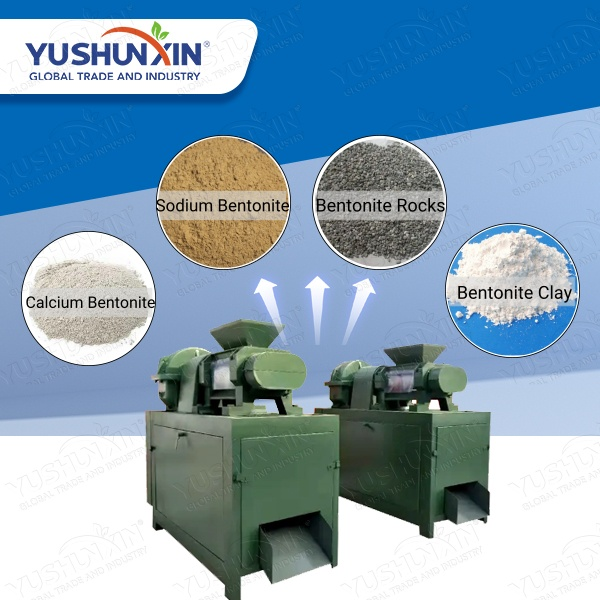
To efficiently use bentonite in fertilizer production, specialized equipment known as a granulator for bentonite is employed. This machine converts bentonite powder into uniform granules that can be easily mixed with NPK components or other fertilizers.
Features of a Granulator for Bentonite
A granulator for bentonite is designed to handle the unique properties of bentonite powder, which can be sticky and difficult to process. Key features include:
- High Efficiency Granulation
Bentonite granulators are designed to produce granules quickly and efficiently, ensuring uniformity in size and shape. - Adjustable Granule Size
The machine allows operators to adjust the granule size according to production needs, ensuring compatibility with different fertilizer formulations. - Durability and Low Maintenance
Modern bentonite granulators are built with durable materials, capable of withstanding abrasive powders and operating continuously with minimal maintenance. - Energy Efficiency
Advanced granulators are designed to minimize energy consumption, reducing operational costs for fertilizer manufacturers.
By using a granulator for bentonite, manufacturers can improve the quality of fertilizer granules, enhance production efficiency, and reduce waste during the granulation process.
Benefits of Integrating NPK Fertilizer Equipment and Bentonite Granulators
Combining NPK fertilizer equipment with a granulator for bentonite in a production line provides multiple advantages:
- Consistent Quality: Granulation machines produce uniform granules, which ensures consistent nutrient distribution in each bag of fertilizer.
- Reduced Waste: Excess material is minimized during the granulation process, making production more cost-effective.
- Improved Soil Health: Bentonite-enhanced fertilizers improve soil water retention, aeration, and nutrient availability.
- Scalability: These machines allow fertilizer manufacturers to scale up production according to market demand.
- Automation: Modern equipment reduces manual labor, minimizes errors, and increases overall production efficiency.
Choosing the Right Equipment
Selecting the appropriate NPK fertilizer equipment and bentonite granulator depends on several factors:
- Production Capacity: Determine the volume of fertilizer you intend to produce daily or annually. High-capacity rotary drum granulators are ideal for large-scale operations, while disc granulators suit smaller plants.
- Raw Material Type: Consider the properties of your raw materials. Bentonite requires specific granulation technology to form stable granules, while other powdered fertilizers may require different granulation methods.
- Budget: Modern NPK fertilizer equipment and bentonite granulators vary in cost. While higher-end machines offer advanced features and durability, more affordable models may suffice for small-scale production.
- After-Sales Support: Reliable equipment suppliers provide installation, training, and maintenance services, which are essential for smooth operation and long-term productivity.
Conclusion
Investing in high-quality NPK fertilizer equipment and a granulator for bentonite is a strategic move for any fertilizer producer aiming to increase efficiency, reduce waste, and produce superior fertilizers. These machines enable consistent granulation, precise nutrient formulation, and improved soil enhancement, all of which contribute to better crop yield and profitability.
Whether you are establishing a new fertilizer plant or upgrading an existing facility, integrating modern granulation equipment into your production line is essential. With the right setup, manufacturers can meet growing agricultural demands while maintaining high standards of quality and efficiency.By choosing advanced NPK fertilizer equipment and a reliable granulator for bentonite, producers ensure long-term success and sustainability in the competitive fertilizer industry.
