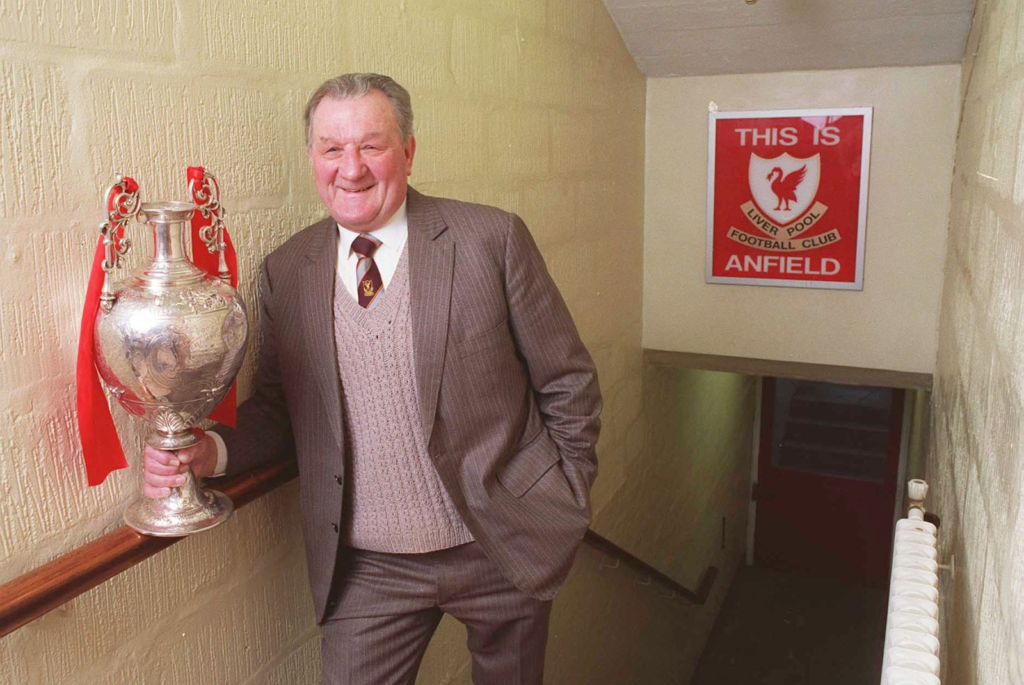
The following is a summary of information from Xoilac TV https://www.chicagocomedyfilmfestival.com/ about Biography of Bob Paisley tells the story of one of the most successful managers in the history of English football. A humble man from the northeast of England, Paisley transformed Liverpool FC into a dominant force in Europe. During his nine-year tenure at Anfield, he secured an incredible haul of trophies, leaving an indelible mark on the sport through his quiet wisdom and unparalleled tactical understanding of the game.
The Biography of Bob Paisley: Liverpool’s Ultimate Legend
Biography of Bob Paisley early life and the Playing Days at Anfield
Biography of Bob Paisley, born in 1919 in the small mining village of Hetton-le-Hole, Robert Paisley was the son of a miner. His upbringing was rooted in the hard-working values of the coal industry, which he later translated into his professional football career. He began his journey as a player with Bishop Auckland before signing for Liverpool in 1939. However, his debut was delayed by the outbreak of World War II, during which he served in the Royal Artillery.
When football resumed, Paisley became a mainstay in the Liverpool midfield. He was a reliable wing-half who played a crucial role in the club’s first post-war league title in 1947. Even as a player, Paisley was known for his analytical mind, often spending time discussing tactics and injuries with the medical staff. This early interest in the physical and strategic aspects of the game laid the foundation for his future transition into coaching and management.
The Boot Room and the Transition to Coaching
After retiring as a player in 1954, Paisley joined the backroom staff at Liverpool. This was the era that saw the birth of the “Boot Room”—a small storage room at Anfield where the coaching staff would meet to drink tea and discuss footballing philosophy. Alongside Bill Shankly, Joe Fagan, and Reuben Bennett, Paisley helped develop a unique culture of collective intelligence and tactical simplicity that would define the club for decades.
While Shankly was the charismatic public face of the club, Paisley was the quiet strategist. He had an uncanny ability to spot a player’s weakness or identify a talent that others missed. When Shankly unexpectedly resigned in 1974, the board turned to Paisley. Initially reluctant to take the spotlight, he eventually accepted the challenge, ushering in the most decorated period in the history of the Merseyside giants.
Achieving European Glory in the Biography of Bob Paisley
A significant chapter in the Biography of Bob Paisley is his unprecedented success on the European stage. While many managers struggle to adapt to the rigors of continental football, Paisley excelled. In 1977, he led Liverpool to their first-ever European Cup victory in Rome, a feat he repeated in 1978 at Wembley and again in 1981 in Paris.
He became the first manager to win three European Cups with a single club, a record that stood for decades. His ability to navigate the complex tactical landscapes of Italian, German, and Spanish opponents proved that his footballing intellect was world-class. Under his guidance, Liverpool was not just a domestic powerhouse but a global brand, feared and respected across the continent for their “pass and move” style.
Read more on Xoilac TV https://www.chicagocomedyfilmfestival.com/lich-thi-dau/
Tactical Brilliance and Talent Identification
Paisley’s genius lay in his ability to evolve the squad without losing momentum. When star player Kevin Keegan departed for Hamburg, Paisley replaced him with Kenny Dalglish, a move that many thought was impossible to pull off successfully. However, Dalglish became perhaps the greatest player in the club’s history. Paisley also integrated legends like Graeme Souness, Alan Hansen, and Ian Rush, ensuring that the team remained at the pinnacle of the sport.
Tactically, he preached patience. He famously told his players that the ball does the work and that maintaining possession was the best form of defense. His teams were characterized by a solid defensive foundation and a clinical edge in the final third. Despite his quiet demeanor and his preference for wearing a cardigan over a suit, his authority in the dressing room was absolute.
The Legacy of a Footballing Genius
When Bob Paisley retired in 1983, he had won 20 major trophies in just nine seasons, including six First Division titles. His trophy-per-game ratio remains one of the highest in the history of professional management. He stayed connected to the club as a director and advisor, continuing to offer his wisdom to future generations of Liverpool managers and players until his passing in 1996.
The Biography of Bob Paisley is not just a list of medals and records; it is a narrative of a man who remained grounded despite reaching the highest peaks of fame. He never sought the limelight, preferring to let his team’s performance speak for him. Today, the “Paisley Gates” at Anfield stand as a permanent reminder of his contribution to the club and the sport.
Conclusion
In summary, the Biography of Bob Paisley represents the golden age of Liverpool Football Club and the height of English managerial excellence. He took the foundations laid by Bill Shankly and built a skyscraper of success that dominated both England and Europe. Paisley’s quiet leadership, tactical foresight, and ability to identify world-class talent made him a unique figure in sports history. His records may eventually be challenged, but his reputation as a gentleman and a winner is etched forever in football folklore.
