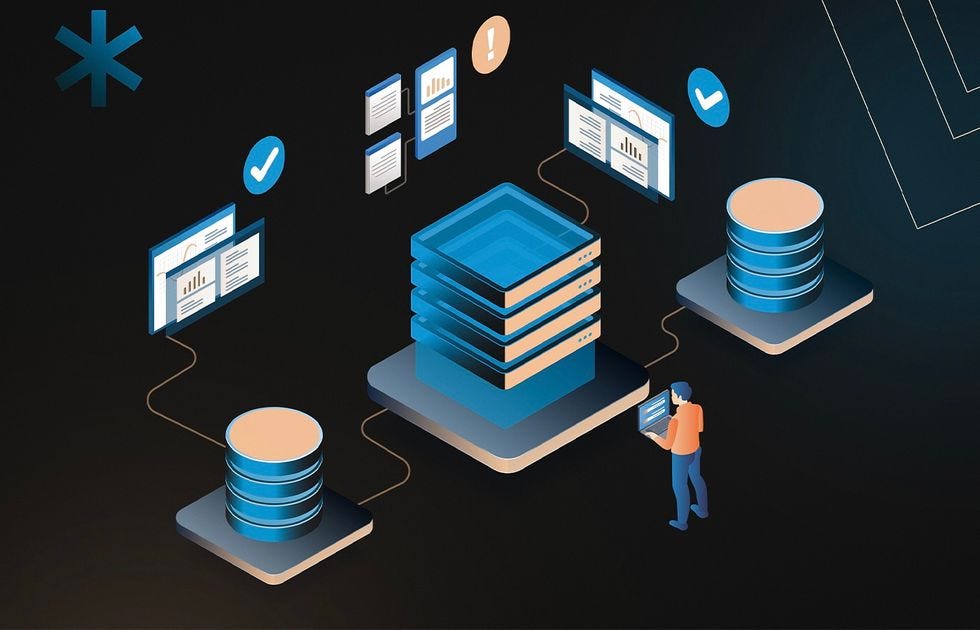
Have you ever used a web application and everything just works? The pages open within a second, the actions become immediate, and the process is so smooth that you even forget that you are using a browser.
Imagine now the converse: the app that slows down, stutters, and puts you at a spinning wheel. Frustrating, right?
To companies, such frustration is not a simple irritation; it is a blow to their reputation, client base, and income. But what is the difference between the former and the latter? It’s not magic. It is a designed, artificial synergy of three fundamental pillars, namely, the user experience (UX) that we observe, the APIs that implement the logic, and the cloud infrastructure that runs the whole thing.
The majority of teams tend to consider UX design, API development, and cloud engineering as different domains. However, any experienced web application development company knows that true performance emerges at their intersection. It’s where a designer’s pixel-perfect interface aligns with an engineer’s optimized queries, all supported by a cloud infrastructure built for speed, scalability, and resilience.
In this article, we’re pulling back the curtain on how we weave these disciplines together to build applications that aren’t just functional, but are genuinely exceptional. Let’s dive in.
The Role of UX in Web Application Performance
The first impression created by users towards your application is user experience (UX). The smooth interaction and clean design will decide whether they will stay or not. But UX is not only about the beauty; it also implies usability, responsiveness, and efficiency.
The fundamental features of UX derived from performance are:
- Speed and Responsiveness: The customers want to have a fast response and smooth transitions. Lazy loading and performance-oriented visuals are some of the techniques that can be used to accomplish this.
- Easy navigation: The strong information architecture will make users get what they want without any resistance.
- Responsive Design: Your web application must be able to be modified for a range of devices and screens.
- Accessibility: Your product should be designed in a way that it can be used by people of all abilities.
The highly efficient applications are based on a well-designed UX design that relies on user research and actual feedback.
The Power of API Architecture
The secret of the power of contemporary web apps is APIs that make them effective and vibrant. They bridge the front-end experiences as well as the back-end systems to allow real-time updates and transactions, as well as user interactions.
Good API architecture guarantees:
- Speed and Reliability: Optimized endpoints decrease latency and increase responsiveness.
- Scalability: API is designed in a modular way; therefore, applications can expand without structural bottlenecks.
- Security: The sensitive data is secured with the help of encryption, token-based authentication, and data validation.
- Consistency: Unified formats (REST or GraphQL) ensure a smooth inter-service communication.
A lot of companies find it difficult to have consistent performance of their apps on different devices. The solution to this is achieved through developing a common code architecture that functions perfectly across platforms by a Flutter app development company. Developers can design well-structured APIs to make sure that mobile and web apps interact with each other and also share common back-end systems.
Cloud Engineering: The Backbone of Performance
High-performing web applications have been based on the cloud infrastructure. It is elastic, accessible, and stable, even in the case of low operation costs.
Practices that enhance performance when it comes to cloud engineering are:
- Auto-Scaling: Auto scaling of the resources with respect to the traffic requirements prevents downtime and optimization of costs.
- Load Balancing: The load is distributed equally to the servers, and this guarantees that even in cases where the servers are overworked, there is stability in the performance.
- Caching Mechanisms: Cloudflare, Redis, or AWS CloudFront are only a few examples that offer information about more available servers that would assist in shortening the load time.
- Ongoing Deployment and Monitoring: DevOps pipelines and observability tools guarantee that the performance is monitored at all times and that the resolution of issues is quicker.
Through efficient use of cloud engineering, businesses are able to provide applications that are resilient and flexible enough to meet the requirements of the fast-changing market or user behaviors.
The Intersection: How UX, API, and Cloud Work Together
The outcome of the harmonious interaction of UX, API, and cloud engineering is disruptive.
- The UX motivates expectations and influences the design of features.
- The API architecture provides a smooth process of communication; interpretations of user actions to the system responses.
- Cloud infrastructure will ensure scalability, which will ensure such responses remain the same regardless of the load.
An example of this would be pressing a button on a dashboard. The UX will know how the button will feel, the API will know that the data requested is fetched in a short time, and the cloud will know that the system has the resources to process the request effectively.
This integrative strategy assists in getting rid of the bottlenecks, enhancing performance, and developing a unified and quality digital experience.
Common Challenges in Web Application Performance — and How to Solve Them
Despite the excellent planning and qualified teams, the creation of a high-performance web application is associated with its own set of difficulties. Lagging APIs and scaling problems that cannot be predicted are just some of the barriers that can have a direct impact on the experience of the users and the stability of the system. The following is a summary of the most prevalent challenges and how they can be overcome in a practical manner:
1. Slow Response Times
Problem: APIs that are not optimized may slow down the delivery of data, causing delayed responses and frustrated consumers.
Fix: Optimize your APIs by using cache processes, query structure, and pagination in order to cut down the size of the payload and also to decrease the time lag.
2. Poorly Adherent UX.
Problem: What appears to be a great design on a particular device may not work well on another device, particularly between browsers or even between screen sizes.
Fix: Use responsive platforms such as Bootstrap or Flutter Web, and thoroughly test cross-device functionality and access.
3. Scalability and Downtime Problems.
Problem: As the number of users increases, the applications might not be able to scale, leading to downtime or reduced performance.
Fix: Stability during different loads can be achieved using automated scaling, load balancing, and failover by deploying cloud orchestration tools such as AWS Elastic Beanstalk or Kubernetes.
4. Security Vulnerabilities
Problem: Web Applications are vulnerable to threats like unauthorized access, information breaches, and injection attacks.
Fix: Implement secure API authentication (OAuth 2.0, JWT), encryption with the help of SSL/TLS, and establish periodic vulnerability testing and pen testing.
The Business Impact of High-Performance Web Applications
Strong web applications are not only a technical accomplishment, but they are also directly proportional to business. Rapid, performant applications result in:
- Increased conversion and retention.
- Reduced maintenance expenses as a result of effective architecture.
- Increased brand recognition and consumer satisfaction.
- Scaling to address increasing business demands.
It can be simply put that performance equals profitability. A business company with an investment in well-designed, user-oriented web applications has a clear competitive advantage.
Conclusion
Building a high-performance web application is not about finding one “silver bullet” technology. It is about performing a symphony in which UX, API, and Cloud Engineering perform at their best in harmony.
It involves a change of thinking, whereby your UX designer knows the significance of API payload size, your backend devoids architects of scalability in the cloud, and your cloud devoids designs of infrastructure based on user-centric performance indicators.
This is the combination, this holistic approach that makes a good digital product a great one. It is the difference between the one that is accepted by users and the application they love. And in the case of any business intending to create long-lasting impressions online, such a difference is all.
